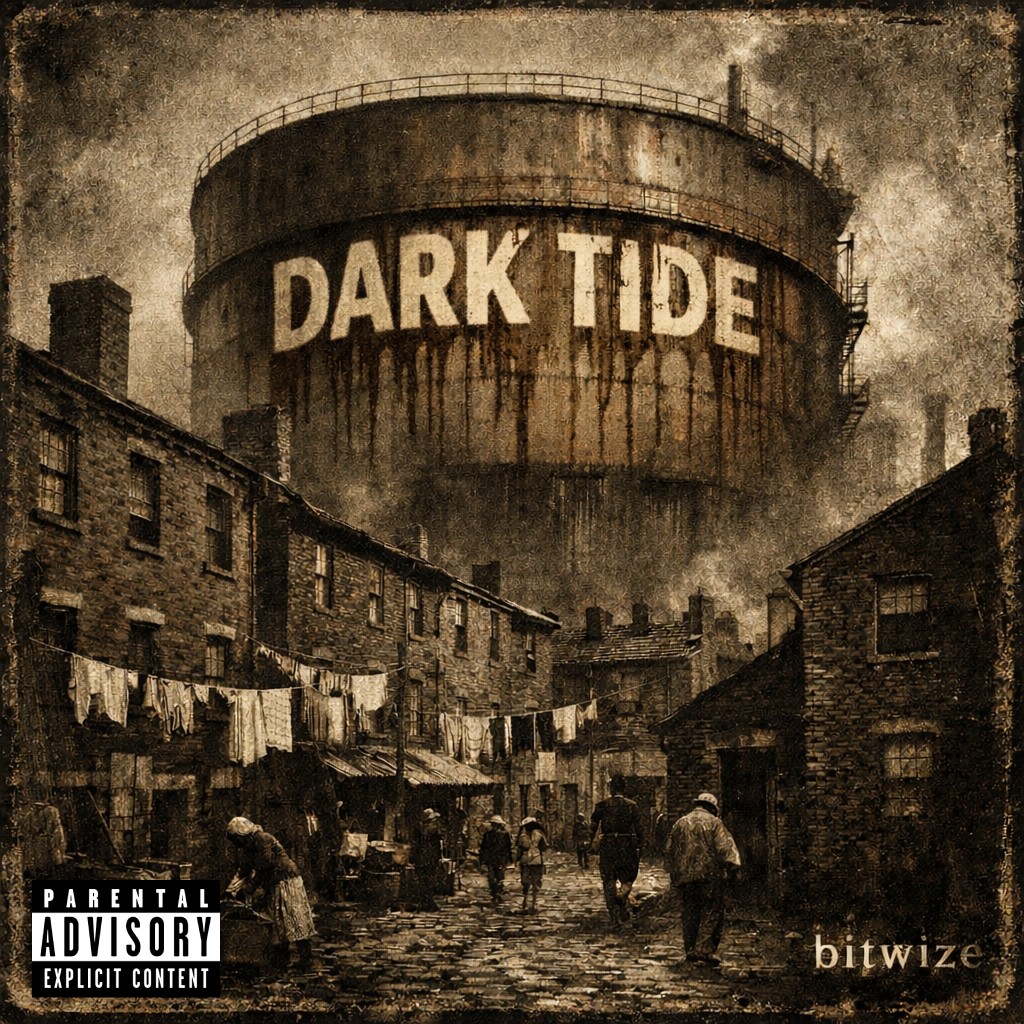
Dark Tide
On January 15, 1919, a poorly-built molasses tank in Boston's North End exploded, unleashing 2.3 million gallons of molasses in a 35 mph wave that killed 21 people and injured 150 more. The victims were mostly Irish and Italian immigrants - the working class who lived in the shadow of a monster that the company knew was dangerous.
// Concept
View Concept
On January 15, 1919, a poorly-built molasses tank in Boston’s North End exploded, unleashing 2.3 million gallons of molasses in a 35 mph wave that killed 21 people and injured 150 more. The victims were mostly Irish and Italian immigrants - the working class who lived in the shadow of a monster that the company knew was dangerous.
This album tells the story of that disaster: the corporate greed that built the tank too fast and too thin, the workers who warned them and were ignored, the chaos and heroism of the rescue, and the six-year legal battle that finally held Big Business accountable for the first time in American history.
It’s a story about class, about immigrants, about justice delayed but not denied. Perfect for Irish punk - because this is Boston, and these were our people.
Structure:
Three Acts:
Act I: The Monster (Tracks 1-4)
Setup: The neighborhood, the tank, the warnings ignored. Building dread.
Act II: The Wave (Tracks 5-8)
The disaster itself. Horror, chaos, death, heroism. The emotional core.
Act III: The Reckoning (Tracks 9-11)
The aftermath. The lies, the trial, the verdict. Defiance and remembrance.
Themes:
- Corporate greed vs. working class lives - Profit over safety, deadlines over lives
- Immigrant experience - Powerless before the disaster, empowered after
- Warnings ignored - Isaac Gonzales’s nightmares, the groaning tank
- Justice delayed - Six years to hold the powerful accountable
- Community and resilience - The neighborhood that rebuilt
- Boston identity - This is a Boston story, told in Boston’s voice
// Tracklist
Commercial Street Listen Sheet Music
Down on Commercial Street in nineteen-nineteen The North End was alive with the working man’s dream Italian and Irish, we came off the boats With calloused hands and empty pockets and holes in our coats The teamsters and the laborers, the dockhands on the pier We built this city brick by brick, year after year
Commercial Street! Where the workers break their backs Commercial Street! Living in the cracks They put a monster in our neighborhood Said it was for the greater good But we couldn’t vote, we had no say On Commercial Street, we’d learn to pay
The children played in alleys where the clotheslines hung While their fathers hauled the cargo and their mothers’ hymns were sung We didn’t own the buildings, we just paid the rent To men in suits who never knew the way our bodies bent And towering above us, painted brown to hide the stains A tank of death was waiting, groaning in the rain
Commercial Street! Where the workers break their backs Commercial Street! Living in the cracks They put a monster in our neighborhood Said it was for the greater good But we couldn’t vote, we had no say On Commercial Street, we’d learn to pay
Fifty feet of steel and rust Holding two million gallons They told us we should trust But the tank kept on groaning And the leaks kept on showing And nobody was listening To the warnings we were throwing
Commercial Street! Where the workers break their backs Commercial Street! Living in the cracks They put a monster in our neighborhood Said it was for the greater good But we couldn’t vote, we had no say On Commercial Street, we’d learn to pay On Commercial Street… we’d learn to pay
Deadline on the WaterfrontE Listen Sheet Music
Arthur Jell was a company man Never read a blueprint, couldn’t understand They made him treasurer, gave him the keys Said “Build us a tank and do it with speed” December thirty-first, that’s your deadline, son Get it done by New Year’s or your career is done A vice-presidency waiting if you make the date So cut every corner, don’t make them wait
Deadline on the waterfront! Deadline on the waterfront! No engineers, no architects, no goddamn oversight Just get it built and get it filled, we’ll make it right Deadline on the waterfront! They didn’t give a damn about the working man’s life
The steel came in thinner than the specs had said But Jell didn’t check it, full steam ahead A worker fell forty feet and died They didn’t stop the job, they swept him aside No water test, just six inches deep Cut every corner, make the deadline keep Paint it brown to hide the leaks and rust In profit we trust, in profit we trust
Deadline on the waterfront! Deadline on the waterfront! No engineers, no architects, no goddamn oversight Just get it built and get it filled, we’ll make it right Deadline on the waterfront! They didn’t give a damn about the working man’s life
December twenty-ninth, they stamped it done December thirty-first, the molasses run Seven hundred thousand gallons from Cuba came And nobody tested nothing, what a shame The tank was groaning from the very start But the suits in their offices didn’t have a heart
Deadline on the waterfront! Deadline on the waterfront! No engineers, no architects, no goddamn oversight Just get it built and get it filled, we’ll make it right Deadline on the waterfront! They didn’t give a damn about the working man’s life No, they didn’t give a damn about the working man’s life!
The Tank Still Stands Listen Sheet Music
Isaac Gon-zah-les worked the tank each day Puerto Rican seaman who had found his way To Boston’s waterfront in nineteen-sixteen The worst job on the worst death trap he’d ever seen He heard it growling like a hungry beast The rivets straining, the groaning never ceased He saw the rust, he saw the leaks run down They painted over everything with a coat of brown
He had nightmares, woke up screaming in the night Ran through Boston streets to check if things were right He brought the rust flakes to the boss man’s desk And Jell looked up and said—
“The tank still stands!” The tank still stands, so what’s the fuss? The tank still stands, don’t bother us I don’t know what you want me to do The tank still stands, now get back to Your post, your job, your place in line The tank still stands, and that’s just fine The tank still stands!
The summer came and Isaac couldn’t sleep The nightmares came, the visions dark and deep He’d wake at midnight, terror in his chest And run down to the waterfront, he couldn’t rest The children scraped the leaking from the ground The sticky sweetness pooling all around But management just caulked it one more time And told him everything was fine, everything was fine
He tried to warn them, tried to make them see The monster waiting for the killing spree He brought the evidence to Jell again And Jell just shrugged and said—
“The tank still stands!” The tank still stands, so what’s the fuss? The tank still stands, don’t bother us I don’t know what you want me to do The tank still stands, now get back to Your post, your job, your place in line The tank still stands, and that’s just fine The tank still stands!
Isaac saw it coming, saw it in his dreams The wave of death, the chaos, and the screams But who believes the worker? Who believes the man With calloused hands against the company’s plan? They’ll believe him now… they’ll believe him now!
The tank still stands! (Not for long!) The tank still stands! (They were wrong!) They didn’t know what they should do The tank still stands—until it’s through Your lies, your greed, your bottom line The tank WON’T stand the test of time! The tank won’t stand!
The tank won’t stand…
January 15th Listen Sheet Music
January fifteenth, nineteen-nineteen The warmest winter morning Boston’d ever seen Forty degrees in the middle of January The North End came alive, nothing ordinary The sun was shining on Commercial Street The workers took their lunches, took a load off their feet
At Engine Thirty-One the firefighters played their cards Bill Connor dealt the hand while George Lay-hee stood guard The children gathered firewood by the railroad tracks Maria, Pas-qual-ay, little sticks in their sacks Martin Claw-er-tee was sleeping in his bed Nobody knew the horror waiting just ahead
Twelve-forty in the afternoon The clock was ticking, and coming soon A sound like thunder, a metallic roar And nothing would be the same anymore
JANUARY FIFTEENTH! The day the monster broke its chains JANUARY FIFTEENTH! The day the blood ran with the stains Twenty-five feet high and thirty-five miles fast A wave of death, and nothing’s gonna last JANUARY FIFTEENTH! The day the North End paid the cost JANUARY FIFTEENTH! The day that twenty-one were lost!
The tank exploded outward, rivets flying like rounds The wave of molasses tore the buildings to the ground The firehouse was lifted, thrown toward the bay The children disappeared, swept away, swept away Midday turned to midnight, darkness swallowed the street Thirteen thousand tons of death, no escape, no retreat
JANUARY FIFTEENTH! The day the monster broke its chains JANUARY FIFTEENTH! The day the blood ran with the stains Twenty-five feet high and thirty-five miles fast A wave of death, and nothing’s gonna last JANUARY FIFTEENTH! The day the North End paid the cost JANUARY FIFTEENTH! The day that twenty-one were lost!
January fifteenth… nineteen-nineteen The darkest day that Boston’s ever seen January fifteenth… we won’t forget The debt of blood that hasn’t been paid yet
Dark TideE Listen Sheet Music
The steel gave way at twelve-forty-five Two million gallons came alive A wall of brown, twenty-five feet high A hundred sixty feet wide and the devil’s eye Thirty-five miles an hour through the street The sound of hell and the stench of sweet Rivets flying like a firing squad This is the moment, this is the wrath of God!
DARK TIDE! DARK TIDE! There’s nowhere to run, there’s nowhere to hide! DARK TIDE! DARK TIDE! Thirteen thousand tons of death and pride! The monster’s loose, the tank has died Here comes the DARK TIDE!
The firehouse lifted off its base Thrown like nothing, erased, erased The elevated railway bent and broke Steel through columns, the trestle choked Buildings crumbled into kindling wood The wave took everything it could Horses screaming, trapped in the flood Molasses mixing with the working man’s blood!
DARK TIDE! DARK TIDE! There’s nowhere to run, there’s nowhere to hide! DARK TIDE! DARK TIDE! Thirteen thousand tons of death and pride! The monster’s loose, the tank has died Here comes the DARK TIDE!
Four directions, four walls of death Stealing the light and stealing the breath Quicksand sticky, you can’t break free The dark tide takes what the dark tide sees Midday turned to midnight black! The neighborhood ain’t coming back! Everything they built is gone! The dark tide rolls on and on and ON!
DARK TIDE! DARK TIDE! There’s nowhere to run, there’s nowhere to hide! DARK TIDE! DARK TIDE! Thirteen thousand tons of death and pride! The monster’s loose, the tank has died Here comes the DARK TIDE! HERE COMES THE DARK TIDE! HERE COMES THE DARK TIDE!
Engine 31 Listen Sheet Music
At Engine Thirty-One they played their cards at noon Bill Connor dealt the hand that warm and quiet noon George Lay-hee watched the game, a smile upon his face A firefighter’s lunchtime in that ordinary place The window showed the tank across the way Nobody knew that this would be the day
Engine Thirty-One, the house that fell Engine Thirty-One, a firefighter’s hell Two hours in the dark, fighting for air George Lay-hee dying, and nobody could get there Engine Thirty-One
The wave hit like a freight train, lifted up the floor The building moved ten feet, they’d never seen before Trapped beneath the rubble in an eighteen-inch space The molasses rising up around Bill Connor’s face “We bumped our heads against the floor above Trying to keep breathing, trying to keep above”
Engine Thirty-One, the house that fell Engine Thirty-One, a firefighter’s hell Two hours in the dark, fighting for air George Lay-hee dying, and nobody could get there Engine Thirty-One
George was pinned beneath the pool table and the keys Of the piano crushing down upon his knees For two long hours he fought to keep his head up high But the molasses kept on rising, and a good man had to die They pulled his body out at five PM His brothers couldn’t save him, couldn’t get to him
Engine Thirty-One, the house that fell Engine Thirty-One, a firefighter’s hell Two hours in the dark, fighting for air George Lay-hee dying, and nobody could get there He left a wife behind, he left three children too Engine Thirty-One… we remember you
Engine Thirty-One… we remember you
Bed Frame Raft Listen Sheet Music
Martin Claw-er-tee was sleeping on the third floor of his home Across from the tank on Copps Hill, he never thought he’d be alone The rumble didn’t wake him, just a noise inside his dream But when he opened up his eyes, he heard his sister scream He woke up drowning in the dark, the molasses all around He thought that he had fallen overboard, he thought that he had drowned
But he grabbed onto his bed frame, held on with all his might His bed became a raft that day, his only chance to fight The bed frame raft, the bed frame raft Floating through the ruins of his life The bed frame raft, the bed frame raft He’d lose his mother, brother, everything that night
The house had flown into the air, the neighbors saw it go Crushed against the elevated tracks in the undertow He found Teresa in the wreckage, pulled her to the shore But Bridget, his dear mother, he would never see no more They pulled her from the rubble, she died within the hour At sixty-five years old, she met the dark tide’s power
He grabbed onto his bed frame, held on with all his might His bed became a raft that day, his only chance to fight The bed frame raft, the bed frame raft Floating through the ruins of his life The bed frame raft, the bed frame raft He’d lose his mother, brother, everything that night
And Stephen, Martin’s brother, his mind began to break The trauma of that January was more than he could take December came and Stephen died inside the hospital walls Another victim of the flood, though nobody recalls The Pen and Pencil bar was gone, the home where he grew up And Martin Claw-er-tee just had to pick the pieces up
He grabbed onto his bed frame, held on with all his might His bed became a raft that day, his only chance to fight The bed frame raft! The bed frame raft! Floating through the ruins of his life! The bed frame raft! The bed frame raft! He survived, but he lost everything that night!
He grabbed onto his bed frame… And he held on… And he held on…
116 Cadets Listen Sheet Music
The U-S-S Nantucket was docked at the pier A hundred six-teen cadets, young men without fear When the wave hit Commercial Street and chaos ruled the day Their commander gave the order and they ran into the fray They didn’t stop to wonder, they didn’t stop to think They ran into the molasses, knee-deep in the drink
A hundred six-teen cadets! A hundred six-teen brave! Running through the darkness, running lives to save! A hundred six-teen cadets! They heard the people cry! Young sailors in molasses, they weren’t afraid to die! SAILORS SAVED THE DAY! That’s what the papers said! A hundred six-teen cadets pulled the living from the dead!
They ran for several blocks through the sticky, deadly flood Their uniforms were covered in molasses and in blood They pulled the victims from the muck, they kept the curious away They worked until the darkness fell on that horrific day Boston Police and Fire came, the Red Cross came through But the first ones in the chaos were the boys in Navy blue
A hundred six-teen cadets! A hundred six-teen brave! Running through the darkness, running lives to save! A hundred six-teen cadets! They heard the people cry! Young sailors in molasses, they weren’t afraid to die! SAILORS SAVED THE DAY! That’s what the papers said! A hundred six-teen cadets pulled the living from the dead!
When disaster strikes and chaos reigns When the streets run dark with death Some men run away but some run IN And fight with every breath! They didn’t know the victims, didn’t know the neighborhood But they ran into hell that day because that’s what heroes would!
A hundred six-teen cadets! A hundred six-teen brave! Running through the darkness, running lives to save! A hundred six-teen cadets! They heard the people cry! Young sailors in molasses, they weren’t afraid to die! SAILORS SAVED THE DAY! That’s what the papers said! A hundred six-teen cadets pulled the living from the dead! A HUNDRED SIXTEEN CADETS!
Blame the AnarchistsE Listen Sheet Music
When the bodies were still warm and the molasses still ran U-S-I-A pointed fingers at the immigrant man “It wasn’t our fault, it wasn’t our greed It was Italian anarchists, that’s what you need to believe” Charles Choate the lawyer with his lying silver tongue Fabricated fairy tales while the grieving mothers sung
Blame the anarchists! Blame the anarchists! When the rich men kill the poor, just clench your fists Blame the anarchists! Blame the anarchists! Point the finger at the foreigners on your list! They killed your children, they destroyed your home But blame the goddamn anarchists and leave the suits alone!
The Salutation Street bomb, yeah that was real But that don’t mean you get to steal The truth from twenty-one who died that day Blame the workers for the company’s decay And when they arrested Sacco and Vanzetti in the spring Choate smiled and said “You see? Those Italians do this thing!”
Blame the anarchists! Blame the anarchists! When the rich men kill the poor, just clench your fists Blame the anarchists! Blame the anarchists! Point the finger at the foreigners on your list! They killed your children, they destroyed your home But blame the goddamn anarchists and leave the suits alone!
You couldn’t read a blueprint! You couldn’t test the steel! You painted over every crack To hide the truth concealed! Your tank was half as thick as it should be! Your rivets were defective! Your greed killed twenty-one But you blame the ones you’re paid to protect? PATHETIC!
Blame the anarchists! BULLSHIT! Blame the anarchists! BULLSHIT! We see through your lies, you corporate shits! Blame the anarchists! NOT THIS TIME! The blood is on YOUR hands, and that’s the bottom line! You killed those people! You let them die! DON’T BLAME THE ANARCHISTS FOR YOUR CRIMES!
Your fault! Your fault! Your fault! YOUR FAULT!
Damon Hall Listen Sheet Music
When the dust had settled and the dead were in the ground The immigrants of Boston looked for justice to be found A hundred nineteen plaintiffs, poor and powerless and small Against the corporation came a lawyer named Damon Hall A street fighter from Belmont with fire in his eyes Who looked at U-S-I-A and saw through all their lies
Six years in the courtroom, six years in the fight Nine hundred twenty witnesses to bring the truth to light Fifteen hundred exhibits, document by document He proved that every death was caused by criminal intent
DAMON HALL! DAMON HALL! He stood up for the people when nobody would at all! DAMON HALL! DAMON HALL! David slew Goliath, and the giant had to fall! When the rich kill the poor and try to walk away Damon Hall made sure that they would pay! DAMON HALL!
Choate said it was anarchists, said it was a bomb But Hall showed all the negligence, showed where it came from The steel was thin, the rivets weak, the warnings all ignored He built his case piece by piece and took it to the Lord When the auditor agreed and the verdict came around Hall said “That’s not enough” and he doubled down
He threatened a jury trial, he wouldn’t let it go Made them pay six hundred thousand, struck a mighty blow The biggest case in Massachusetts history that day When David beat Goliath and the workers had their say
DAMON HALL! DAMON HALL! He stood up for the people when nobody would at all! DAMON HALL! DAMON HALL! David slew Goliath, and the giant had to fall! When the rich kill the poor and try to walk away Damon Hall made sure that they would pay! DAMON HALL!
For the workers! (DAMON HALL!) For the children! (DAMON HALL!) For the families! (DAMON HALL!) For the fallen! (DAMON HALL!) Against the liars! (DAMON HALL!) Against the greed! (DAMON HALL!) One lawyer stood and fought for what we need!
DAMON HALL! DAMON HALL! He stood up for the people when nobody would at all! DAMON HALL! DAMON HALL! David slew Goliath, and the giant had to fall! When the rich kill the poor and try to walk away Damon Hall made sure that they would pay! DAMON HALL! DAMON HALL! DAMON HALL!
DAMON HALL!
The Verdict Listen Sheet Music
April twenty-eighth, nineteen twenty-five Six long years but justice stayed alive Hugh Awg-den stood before the court that day And read the verdict that would make the bastards pay “Structural failure,” that’s what the record shows “No evidence of sabotage,” everybody knows The tank was weak, the steel was thin U-S-I-A was guilty of this sin
Six hundred twenty-eight thousand dollars paid A landmark decision, the workers’ crusade The workers won this fight against the company men They knew they’d have to fight and fight again!
THE VERDICT! GUILTY AS CHARGED! The corporation thought they were too large! THE VERDICT! JUSTICE IS DONE! For the twenty-one who died, we finally won! No more lies! No more deceit! The working class will not accept defeat! THE VERDICT!
They said the engineer must sign his name They said the architect must stake his claim They said the inspector has to check the work No more corporations hiding in the murk From Boston to the nation, the laws began to change Professional standards, nothing out of range The dark tide gave us something in the end A legacy that corporate greed could not defend
The immigrants who died on Commercial Street Did not die in vain, they made us complete The fight goes on, the memory stays We carry their names through all of our days
THE VERDICT! GUILTY AS CHARGED! The corporation thought they were too large! THE VERDICT! JUSTICE IS DONE! For the twenty-one who died, we finally won! No more lies! No more deceit! The working class will not accept defeat! THE VERDICT!
For Isaac who saw it coming in his dreams For George who died fighting in the seams For Martin on his bed frame in the dark For the children gathering firewood in the park For everyone who lived on Commercial Street Who felt the dark tide crashing at their feet You are not forgotten! You will not be erased! Your sacrifice brought justice to this place!
THE VERDICT! (GUILTY!) THE VERDICT! (GUILTY!) THE VERDICT! JUSTICE IS DONE! For the twenty-one who died, WE FINALLY WON! January fifteenth, nineteen-nineteen The darkest day that Boston’s ever seen But from the darkness came the light of change THE VERDICT! REMEMBER THE NAMES!
Commercial Street… we won’t forget Commercial Street… we’re not done yet Commercial Street… remember the names COMMERCIAL STREET!
// Sources & Research
View Sources
The Great Molasses Flood - Research Document
Overview
Event: The Great Molasses Flood (also known as the Boston Molasses Disaster) Date: January 15, 1919, approximately 12:40-12:45 PM Location: Commercial Street, North End, Boston, Massachusetts Casualties: 21 dead, 150+ injured Cause: Structural failure of a 2.3 million gallon molasses storage tank Owner: Purity Distilling Company (subsidiary of United States Industrial Alcohol - USIA)
Part 1: The Tank and Its Construction
The Company
United States Industrial Alcohol (USIA)
- Major industrial alcohol producer
- Parent company of Purity Distilling Company
- Produced industrial alcohol from molasses for:
- Munitions manufacturing (smokeless powder/cordite for WWI)
- Alcoholic beverages (rum, beer, brandy)
- Customers included du Pont, Hercules Powder, Aetna Explosives
- Supplied British, French, and Canadian governments during WWI
- Business boomed after August 1914 (WWI outbreak in Europe)
Why Build the Tank?
Strategic Reasons:
- WWI created massive demand for industrial alcohol (munitions)
- Boston’s waterfront location allowed direct offloading from molasses ships
- Pipeline connected to Purity’s Cambridge distillery
- Tank served as buffer inventory to meet fluctuating demand
- Prohibition was coming (ratified January 16, 1919 - THE DAY AFTER the disaster)
The Rush:
- USIA needed tank operational by December 31, 1915
- Lucrative war contracts at stake
- Company vice-presidency promised to Arthur Jell if successful
Tank Specifications
| Attribute | Measurement |
|---|---|
| Height | 50 feet |
| Diameter | 90 feet |
| Circumference | 240 feet |
| Capacity | 2.3-2.5 million gallons |
| Weight when full | ~13,000 short tons |
| Cost | $30,000 (contracted) |
| Location | 529 Commercial Street, near Keany Square |
Construction Timeline
| Date | Event |
|---|---|
| Late 1914 | Hammond Iron Works commissioned |
| April 1915 | Blueprints completed |
| May-Sept 1915 | Lease negotiations with Boston Elevated Railway |
| September 24, 1915 | Twenty-year lease signed ($5,000/year) |
| November 1915 | Foundation construction began |
| December 1, 1915 | Steel plates shipped to Boston |
| December 8, 1915 | Worker Thomas DeFratus died falling 40 feet |
| December 13-14, 1915 | Superstorm caused two-day delay |
| December 26, 1915 | Sleet storm delay |
| December 29, 1915 | Final invoice issued; only 6-inch water test performed |
| December 31, 1915 | First molasses cargo arrived (700,000 gallons from Cuba) |
Arthur P. Jell - The Man in Charge
Background:
- USIA Treasurer (promoted 1911)
- Career began at age 14 as office boy at Hiram Walker & Sons
- Moved to Boston in 1909
- NO technical experience
- NO architectural experience
- NO engineering experience
- Could not read blueprints or determine safe steel specifications
His Role:
- Tasked with completing tank by December 31, 1915
- Vice-presidency promised as reward for success
- Prioritized deadline over safety at every turn
Key Negligent Decisions:
- No engineers or architects consulted during construction
- Authorized only 6-inch water test instead of full tank test (saved time/money)
- Never had steel inspected by anyone outside Hammond Iron Works
- No metallurgical testing of delivered steel
- Ignored worker warnings about tank condition
- Painted tank brown to hide leaking molasses
Damning Quote (to Isaac Gonzales):
“I don’t know what you want me to do. The tank still stands.”
Part 2: Engineering Failures
Steel Deficiencies
Original Design Specifications:
| Ring (from bottom) | Specified Thickness |
|---|---|
| First (base) | 0.67 inches |
| Seventh (top) | 0.312 inches |
Actual Delivered Steel:
- Every steel plate was THINNER than specification
- Top ring: 0.284 inches (vs 0.312 specified)
- Modern analysis (2014): Steel was half as thick as it should have been
Metallurgical Problems:
- Steel lacked manganese (made it more brittle)
- Rivets were flawed
- First cracks formed at rivet holes
No Testing or Oversight
- No building codes required testing or inspection
- No engineer certification required for tank design
- No permit required to build the tank (only foundation permit needed)
- No water test performed (contract specified full tank test)
- No post-construction inspection
Warning Signs Ignored
Tank Behavior:
- “Groaned” ominously when filled
- Vibrated during loading
- Visible leaks around sides (pooled at base)
- Children collected leaked molasses in pails
USIA’s Response:
- Re-caulked multiple times
- Painted tank brown to camouflage leaking molasses
- Dismissed worker concerns
- Continued operations
Isaac Gonzales - The Man Who Saw It Coming
Background:
- Puerto Rican-born
- Four years as seaman
- Previously worked in Washington, D.C. (attorney’s offices, U.S. Attorney General’s office)
- Settled in Boston 1910
- Hired as tank maintenance man, February 1916
- Living at Boston YMCA when hired
His Warnings:
- Trained by William White (his supervisor)
- Heard tank “growling” - described it as “alive… the low growl of a hungry animal”
- Saw rust, leaks, structural deterioration
- Had nightmares about the tank collapsing
- During summer 1918, ran through Boston streets at night to check if tank still stood
- Brought rust flakes directly to Arthur Jell’s desk
- Was dismissed with: “I don’t know what you want me to do. The tank still stands.”
Part 3: The North End Community
Demographics (1919)
- 90% Italian immigrants by 1900
- Also significant Irish immigrant population
- Working class: laborers, dockhands, drivers, teamsters
- Low political participation (many not citizens, couldn’t vote)
- Powerless to contest tank construction in their neighborhood
Anti-Immigrant Climate
Political Context:
- President Woodrow Wilson (1902): “…now there came multitudes of men of the lowest class from the south of Italy…”
- Boston police viewed North End as “headquarters for the leading Italian anarchists in America”
- December 1916: Bomb attack on Salutation Street police station (~half mile from tank)
- WWI intensified xenophobia
Anarchist Activity:
- Real bombings targeting USIA facilities during 1914-1916
- Police protection established at tank site
- USIA paid for permanent fixed-post police presence
- This later gave ammunition to USIA’s blame-the-anarchists defense
Part 4: The Disaster - January 15, 1919
Weather and Setting
- Unusually warm for January: over 40°F
- Commercial Street busy with laborers, horses, elevated trains
- Lunchtime activity
The Moment of Collapse (12:40-12:45 PM)
What People Were Doing:
- Engine 31 firefighters playing cards at lunchtime (Bill Connor, Fred McDermott, Nat Bowering, Paddy Driscoll)
- George Layhe and stonecutter John Barry watching the card game
- Children Maria Di Stasio (10), Antonio Di Stasio (8), and Pasquale Iantosca (10) gathering firewood near tank
- Martin Clougherty sleeping in his bedroom (third floor, house across from tank)
The Sound:
- “Deep rumble”
- “Metallic roar”
- “Loud crashing sound”
Martin Clougherty’s Account:
“I was in bed on the third floor of my house when I heard a deep rumble. I was asleep and the rumble did not wake me thoroughly. The first impression I had that something unusual had happened was when I awoke in several feet of molasses.”
The Wave
| Characteristic | Measurement |
|---|---|
| Height | 15-40 feet (25 feet at outset) |
| Width | 160 feet |
| Speed | 35 mph |
| Volume | 2.3 million gallons |
| Weight | ~13,000 short tons |
Behavior:
- Moved in four separate directions after escaping tank
- Behaved like four walls of viscous liquid
- “Midday turned to darkness”
- Thousands of rivets became lethal projectiles
Destruction
Structures Destroyed/Damaged:
- North End Paving Yard buildings (torn to kindling)
- Engine 31 firehouse (lifted off foundation, moved 10 feet toward harbor)
- Clougherty house (crushed, “flew into the air”)
- Boston Elevated Railway trestle (buckled)
- Freight cars, automobiles, wagons
- Bay State Railway freight sheds
- Brick tenements and storefronts along Commercial Street
One-ton steel piece sliced through elevated railroad column, nearly collapsing overhead tracks.
Hero: Royal Albert Leeman
- Elevated train operator
- Stopped his train seconds before collapsing trestle would have derailed it
- Sprinted down tracks to halt approaching northbound train
- Prevented potential secondary disaster
Part 5: The Victims
The 21 Dead
| Name | Age | Occupation | Details |
|---|---|---|---|
| Patrick Breen | 44 | Laborer | Died of pneumonia and internal injuries after being swept into harbor |
| William Brogan | 61 | Teamster | Working at North End Paving Yard |
| Bridget Clougherty | 65 | Homemaker | Mother of Martin; house destroyed; died one hour after rescue |
| Stephen Clougherty | 34 | — | Mental illness worsened by trauma; died Dec 11, 1919 at Boston State Hospital (counted as indirect victim) |
| John Callahan | 43 | Paver | — |
| Maria Di Stasio | 10 | Child | Suffocated in molasses while gathering firewood |
| William Duffy | 58 | Laborer | — |
| Peter Francis | 64 | Blacksmith | — |
| Flaminio Gallerani | 37 | Driver | — |
| Pasquale Iantosca | 10 | Child | Struck by railroad car; last seen in red sweater |
| James Kinneally | Unknown | Laborer | — |
| Eric Laird | 17 | Teamster | — |
| George Layhe | 37-38 | Firefighter (Engine 31) | Drowned after ~2 hours trapped under pool table; left wife and 3 children |
| James Lennon | 64 | Teamster | — |
| Ralph Martin | 21 | Driver | — |
| James McMullen | 46 | Foreman | Compound fractures both legs; severe contamination |
| Cesare Nicolo | 32 | Expressman | Last body found; discovered under wharf nearly 4 months later |
| Thomas Noonan | 43 | Longshoreman | — |
| Peter Shaughnessy | 18 | Teamster | — |
| John Sieberlich | 69 | Blacksmith | — |
| Michael Sinnott | 78 | — | Oldest victim |
Victim Demographics:
- Age range: 10 to 78
- 18 of 21 were men
- Mostly Irish laborers
- Several Italian Americans
- Working class: laborers, drivers, teamsters, dockhands
The Children
Maria Di Stasio (10) and Pasquale Iantosca (10):
- Gathering firewood near tank with Antonio Di Stasio (8)
- Pasquale’s father watched from apartment window as children disappeared
- Antonio survived but suffered severe head injury (flung into light post)
- Maria suffocated in molasses
- Pasquale killed by railroad car impact
The Clougherty Family
Bridget Clougherty (65):
- Mother of Martin, Teresa, and Stephen
- House on Copps Hill Terrace, directly across from tank
- House “flew into the air” per neighbors
- Severely injured; died one hour after rescue
Martin Clougherty:
- Owner of The Pen and Pencil bar
- Was sleeping when disaster struck
- Awoke in molasses, thought he was “overboard”
- Used his bed frame as a raft to survive
- Pulled sister Teresa from the molasses
- Could not find mother or brother in debris
- Awarded $2,500 for injuries plus $1,800 for destroyed house
Stephen Clougherty (34):
- Mental illness magnified by trauma
- Died December 11, 1919 at Boston State Hospital for the Insane, Mattapan
- Family received nothing for his death (Ogden ruled it not connected to flood)
Firefighter George Layhe
- Engine 31, Boston Fire Department Marine Engineer
- Age 37-38, wife and three children
- Wedged under pool table and piano, legs crushed by timbers
- Struggled for ~2 hours to keep head above rising molasses
- Finally drowned when stamina gave out
- Body pulled from firehouse around 5 PM (4+ hours after collapse)
- Family received $1,000 extra due to hours of suffering before death
Part 6: The Rescue
First Responders
USS Nantucket (Massachusetts Nautical School training ship):
- Docked at playground pier nearby
- 116 cadets under Lt. Commander H.J. Copeland
- First on scene
- Ran several blocks into knee-deep molasses
- Pulled survivors while keeping onlookers away
Boston Globe headline (Jan 16, 1919):
“Sailors Do Heroic Work in Aiding Victims”
Other Responders:
- Boston Police
- Boston Fire Department
- Red Cross (nurses dove into molasses)
- Army and Navy personnel
- Haymarket Relief Station doctors and nurses
Rescue Challenges
- Molasses was “quicksand-like”
- Firefighters spread ladders over it to avoid falling in
- Used ropes, planks, makeshift rafts
- Each step required enormous effort
- Syrup stuck to uniforms and equipment
- Nearly impossible to maintain speed or coordination
Engine 31 Rescue
Survivors:
- Bill Connor, Nat Bowering, Paddy Driscoll - freed from 18-inch crawl space
- John Barry (stonecutter) - pinned facedown for hours, received multiple morphine injections
Bill Connor’s Testimony:
“I looked out the window and saw a wall of molasses rolling like a wave at the seashore. I put my hand on the doorknob and the molasses surrounded the building; shut out the light, and the next thing I knew I came to under the building.”
“The flood of molasses at times flowed up to our ears. We bumped our heads on the floor above trying to keep our noses and mouths above the fluid.”
Rescue Efforts:
- 50+ men dug to free trapped firefighters
- Used acetylene torches
- Took 2+ hours to reach their own
- George Layhe found dead around 5 PM
Medical Response
Haymarket Relief Station:
- Received 40+ injured victims
- Hospital “reeked of molasses” - floors, walls, nurses covered
- Staff cleared molasses from breathing passages
Dr. John Breslin:
“The whole hospital reeked of molasses. It was on the floors, on the walls, the nurses were covered with it, even in their hair.”
Cleanup
- 300+ workers over following days
- Saltwater (pumped from harbor) broke down molasses
- Took weeks to clear the last residue
- Police shot dozens of molasses-trapped horses to end suffering
- Final victim (Cesare Nicolo) not found until nearly 4 months later (under a wharf)
Part 7: The Lawsuit
Immediate Response
Mayor Andrew Peters:
- Called for “rigid investigation to determine the cause of the explosion”
- Language suggested collapse was not accidental
USIA’s Immediate Defense:
- Attorney Henry Dolan blamed “outside influences”
- Suggested North End anarchists planted a bomb
- “Something from the outside opened up the tank”
The Case
Dorr vs. United States Industrial Alcohol
| Attribute | Detail |
|---|---|
| Type | Class action lawsuit |
| Scale | Largest in Massachusetts history at the time |
| Claims | 119 separate suits combined |
| Plaintiffs | ~150 individuals (mostly poor Italian and Irish immigrants) |
| Defendant | United States Industrial Alcohol (USIA) |
| Duration | 5-6 years (began August 1920) |
| Witnesses | 920+ |
| Exhibits | 1,584 |
| Testimony Days | 341 |
| Closing Arguments | 4,600 pages; 11 weeks |
The Lawyers
Plaintiff’s Attorney: Damon Everett Hall
- “Feisty street-fighting type”
- Lived in Belmont (moved 1913)
- Served as Belmont’s Town Meeting Moderator
- Later: granddaughter Sandra Sloan spoke at 100th anniversary events
- Strategy: Document pattern of “gross neglect and shoddy craftsmanship”
Defense Attorney: Charles Francis Choate
- Represented USIA
- Fabricated story blaming Italian anarchists
- Exploited Boston-area paranoia about anarchist activity
- Defense designed to prey on anti-immigrant sentiment
USIA’s Anarchist Defense
Their Claim:
- Italian anarchists blew up the tank to protest Big Business
- Pointed to December 1916 Salutation Street police station bombing
- Cited real anarchist attacks on USIA facilities 1914-1916
Strengthened (Temporarily) by:
- April 15, 1920: Police arrested Sacco and Vanzetti for murder
- This made anarchist threat seem more credible
Auditor’s Rejection:
- Hugh Ogden found NO evidence of sabotage
- Concluded tank collapsed due to structural failure
Hugh W. Ogden - The Auditor
Background:
- Lawyer educated at University of Pennsylvania and Harvard Law
- “Outstanding Episcopal layman” and authority on canon law
- Member of vestry at Old North Church
- WWI: Judge Advocate for 42nd Infantry Rainbow Division in France
- Served alongside Generals Pershing and MacArthur
- Referred to as “Colonel”
His Appointment:
- Massachusetts Superior Court appointed him to hold hearings
- Recognized that poor, powerless immigrants faced one of nation’s largest corporations
His Ruling (April 28, 1925):
“Special Report on Liability to the Superior Court of Massachusetts”
Key Findings:
- Tank collapsed due to structural failure, NOT sabotage
- Company showed “no concern for the safety of the people”
- Tank designer had no technical training, couldn’t read blueprints
- No engineers or architects consulted or inspected work
- Tank’s structural integrity was never tested before filling
- Company managers ignored employee warnings about tank’s unsound condition
This Was Historic:
- “Really the first major decision against a United States corporation” (Stephen Puleo)
- Marked “the beginning of the end of an era when big business faced no government restrictions”
Damages
Ogden’s Initial Assessment: $300,000
Final Settlement:
- Damon Hall threatened jury trial for damages
- USIA negotiated privately
- Per USIA’s 1925 financial results: Doubled Ogden’s suggested awards
- Total paid: $628,000 (some sources say up to $1 million)
- Equivalent to ~$8 million today
Individual Awards (examples):
- Clougherty family: $2,500 each for injuries + $1,800 for destroyed house
- Layhe family: $1,000 extra due to prolonged suffering before death
- Stephen Clougherty’s death: $0 (ruled unconnected to flood)
Part 8: Legacy and Regulatory Changes
Regulatory Reforms
Direct Results:
- Engineers required to sign and seal plans
- Building inspectors required to examine projects
- Architects required to show their work
- Professional engineering licensing requirements adopted in Massachusetts
- Other states emulated these practices
- Major structures required to have plans sealed by professional engineer
National Impact:
- “Every state soon passed laws that required all engineers to obtain professional certification”
- Engineering certification laws became standard nationwide
- Stricter construction codes adopted across the country
The End of the Molasses Trade
- Disaster “effectively ended more than 300 years of molasses trade”
- Combined with Prohibition (ratified January 16, 1919 - day after disaster)
- USIA’s business model collapsed
Community Impact
- “Uptick in active citizenship within the Italian community”
- Increasing numbers became U.S. citizens
- Gained decision-making power over neighborhood’s future
Modern Analysis
2014 Engineering Study:
- Applied modern engineering analysis
- Confirmed steel was half as thick as needed (even by lax 1915 standards)
- Identified manganese deficiency making steel brittle
- Confirmed rivet flaws (first cracks formed at rivet holes)
Commemoration
- January 15 remains an informal anniversary of remembrance in Boston
- Stephen Puleo’s “Dark Tide” (2003) remains definitive account
- 100th anniversary (2019) saw significant media coverage
- Plaque exists at site (Langone Park)
Key Characters for Album
Heroes/Sympathetic Figures
| Character | Role | Story Arc Potential |
|---|---|---|
| Isaac Gonzales | Tank maintenance worker | The man who warned them; his nightmares came true |
| Damon Hall | Plaintiff’s attorney | David vs. Goliath lawyer who took on Big Business |
| Hugh Ogden | Court-appointed auditor | Fair arbiter who saw through the lies |
| George Layhe | Firefighter | Fought for hours to live; tragic hero |
| Martin Clougherty | Barkeep/survivor | Lost mother, brother, home; survived on bed frame |
| The Children | Maria, Pasquale, Antonio | Innocent victims gathering firewood |
| USS Nantucket Sailors | Rescuers | Ran into the disaster to save strangers |
| Bill Connor | Firefighter survivor | Lived to tell the tale |
Villains/Antagonists
| Character | Role | Story Arc Potential |
|---|---|---|
| Arthur Jell | USIA Treasurer | Incompetent, profit-driven, ignored warnings |
| USIA | Corporation | Corporate greed, negligence, lies |
| Charles Choate | Defense attorney | Fabricated anarchist story, preyed on prejudice |
The Community
- Italian and Irish immigrants
- Working class: laborers, drivers, teamsters, dockhands
- Powerless before the disaster, empowered after
- North End neighborhood as character
Suggested Narrative Arc for Album
Act I: The Monster (Setup)
- Introduction to North End community (immigrants, working class)
- The tank arrives (ominous presence, built in haste)
- Arthur Jell and corporate pressure
- Isaac Gonzales’s warnings ignored
- The neighborhood lives in shadow of “the monster”
Act II: The Wave (Disaster)
- January 15, 1919 - the day (lunchtime, card games, children playing)
- The collapse and wave (horror, destruction)
- George Layhe’s death (firefighter trapped, drowning in molasses)
- The rescue (sailors, firefighters, chaos)
Act III: Justice (Aftermath)
- The blame game (anarchists accused, immigrants scapegoated)
- Damon Hall takes the case (David vs. Goliath)
- Hugh Ogden’s verdict (truth wins, USIA guilty)
- Legacy (regulations, empowerment, remembrance)